
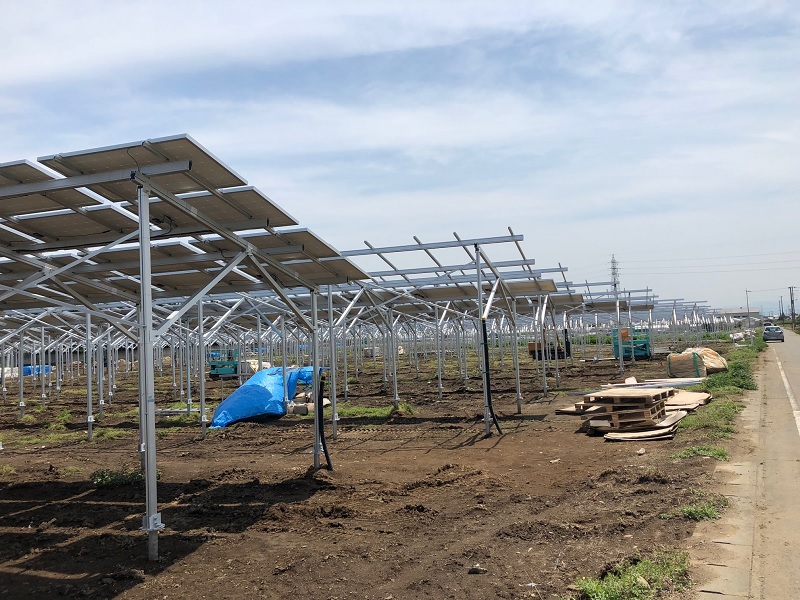
Agricultural Solar Mounting
Irrigation pumping, on-farm power and agri-PV — structures built for soft ground, long access roads, and sites that have to keep working.
Ground conditions first
Soft or uneven ground changes the foundation — we design for what is under the site.
Delivered where the road ends
Components are planned for sites with difficult access.
Land stays in use
Where the array can be elevated, the ground underneath keeps working.
Local support
Lagos-based team with nationwide supply and follow-up service.
The farm cannot pause for the structure.
Farm and irrigation sites are usually far from a reliable grid, and often far from a good road. The mounting structure has to suit soft or uneven ground, arrive at a site that may be difficult to reach, and be practical to assemble without a large crew.
The array normally serves irrigation pumping, on-farm load, or both — and it frequently has to share the land rather than take it out of production.
So the design starts from the farm’s working pattern, not from a standard ground-mount drawing.
-
The site is remote and the access is poor
Long, unfinished components do not travel well to a farm track. The structure has to be planned for the journey.
-
The ground is soft or uneven
A foundation detail taken from a firm, level site may simply not apply here.
-
The land still has to work
A conventional ground array takes acreage out of production for the life of the project.
-
The load is not constant
Irrigation pumping is seasonal and heavy while it runs — the array has to be sized around that, not an average.
Designed around the farm
Foundation, layout and elevation follow the ground, the access road and what the land is doing.
Five variables decide the answer
Tell us what you know about the site and the farm, and we will size the rest.
Ground conditions
Soft, uneven or seasonally wet ground changes the foundation and the frame.
Access & transport
What can reach the site decides how the structure has to be split and assembled.
Irrigation load
Pumping is seasonal and heavy while it runs — the array is sized around the duty, not an average.
Land use
Whether the array can occupy the field or has to be elevated above it.
Moisture & exposure
Irrigation, fertiliser and continuous damp change what the coating has to withstand.
Tell us about the farm
Site location, the load you need to run and the area available.
Two decisions that set your design
The foundation for the ground you have, and whether the array shares the land.
Foundation for the ground you have
Soft or uneven ground rules out the simplest options. The foundation is chosen from the subsoil, not from habit.
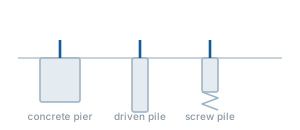
- Concrete pier — the general-purpose option where the ground allows
- Driven pile — where ground conditions suit a deeper foundation
- Screw pile — minimal excavation, useful on soft or sensitive ground
Does the array share the land?
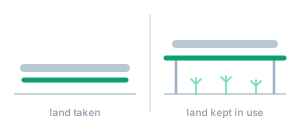
A ground array is cheaper and simpler. An elevated structure lets the land underneath keep working — at a higher cost.
- Ground array — lowest cost, takes the footprint out of use
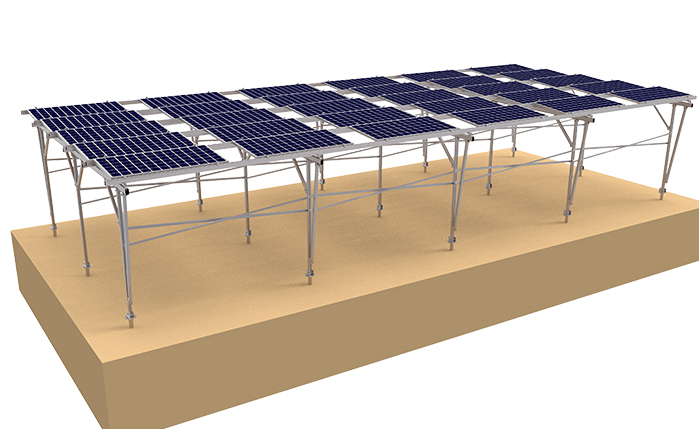
- Elevated agri-PV — keeps the land productive beneath the array
- Mixed layout — dedicated array for pumping, elevated rows elsewhere
Technical specifications
Tell us what you know about the site and the farm, and we will size the rest.
| Material | AL6005-T5 &SUS304 |
| Installation side | Open field/Ground |
| Wind Load | 60m/s |
| Product name | Solar Farm Agricultural System |
| Snow Load | 1.4kN/m2 |
| Foundation | Concrete base, Ground screw |
| Color | Silver |
| Module orientation | Landscape, Portrait |
Power where the work happens
Anywhere the grid is far away and the work is heavy while it runs — irrigation first, then the rest of the farm load.
- Typical applications
- Irrigation and borehole pumping arrays
- On-farm and agro-processing load
- Rural and off-grid agricultural sites
- Agri-PV where the land stays in production
- Livestock, poultry and cold-store operations
- What's included
- Ground and access assessment
- Foundation proposal for the site
- Structural sizing for the pumping duty or load
- Bill of quantities for procurement
- Installation drawings and site guidance
Who We Work With
Agricultural sites are not one market — the load, the land and the access differ on every one.
Commercial farms & plantations
Irrigation and processing load on sites that the grid does not reach reliably.
Irrigation & borehole operators
Pumping arrays sized to the duty cycle, not to an average daily figure.
Agro-processing facilities
Cold store, milling and processing load where downtime costs the crop.
Cooperatives & programmes
Rural and development-funded sites that need a structure repeatable across locations.
Tell us about your farm or irrigation project
Send the site location, the load you need to run and the area available. We will tell you what structure suits it.
Frequently asked questions
Yes, where the structure is elevated enough for the land to stay in use. That changes the design and the cost, and we will set out what it adds before you commit.
Access is assessed as part of the survey. Where a fully assembled structure cannot be delivered, we look at how components can be split or assembled on site.
It depends on the subsoil. Farm ground is often soft or uneven, so we work from a site assessment rather than assuming a standard foundation detail.
Yes. Tell us the pump and its duty cycle, and we will size the array and the structure around it — including the seasonal peak rather than an average figure.
Both. Supply-only for your own contractor, or delivered and installed as part of a turnkey project.