
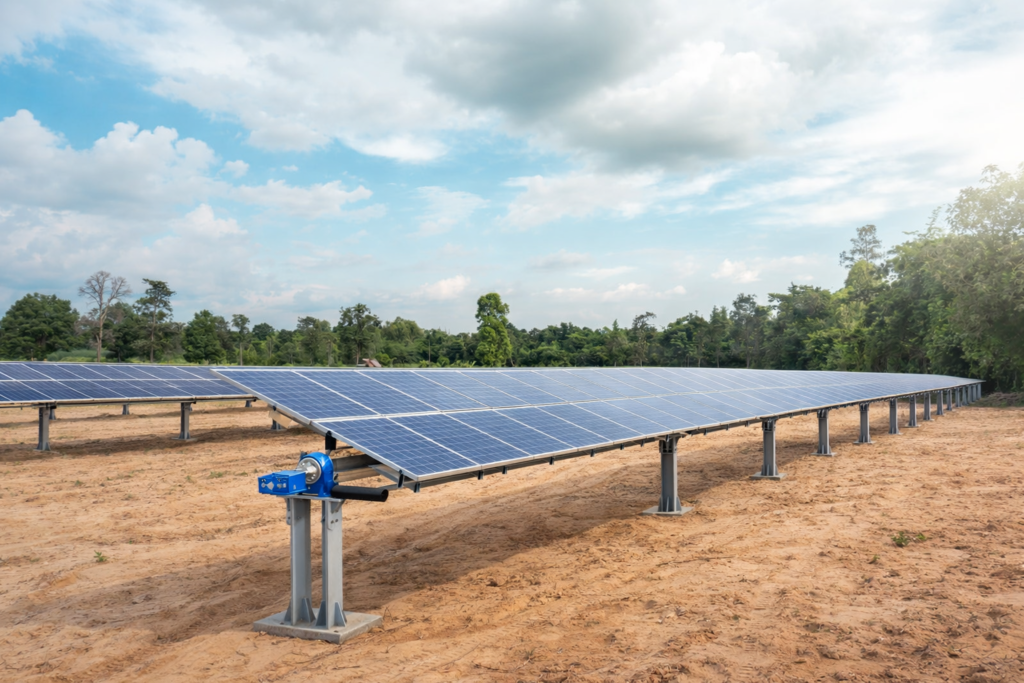
Single-Axis Solar Trackers
Tracking raises output on the right site — and adds cost and maintenance on the wrong one. We will tell you which yours is.
Judged against your site
The gain is worked out on your ground, not quoted from a reference site.
Fixed tilt still wins sometimes
On constrained, shaded or high-wind sites we will recommend it.
Structure from our own factory
Produced at our group's 30,000 m² mounting-structure base.
Local support
Lagos-based team with nationwide supply and follow-up service.
Tracking is not automatically better.
A tracker follows the sun from east to west, holding the array closer to the angle of the light through the day. On a large, flat, unshaded site that raises daily output compared with a fixed-tilt structure.
But the trade-off is real: more structure, more moving parts, and a maintenance routine that fixed tilt never needs. Whether the extra yield pays for all of that depends almost entirely on the site.
So we assess the site before we recommend tracking at all.
-
Tracking is sold as free extra yield
The gain is quoted from an ideal site — flat, open, cloudless — rather than from yours.
-
The gain depends on the ground
On rolling, shaded or partially obstructed ground the advantage shrinks quickly.
-
Moving parts need a routine
Drives, bearings and controls need scheduled attention for the life of the plant — unlike a fixed structure.
-
Wind exposure changes the design
A tracker presents more area to the wind and must survive the same storms as a fixed array.
Assessed against your site, not a reference site
Layout, ground, wind and maintenance access are reviewed before any recommendation is made.
Five variables decide the answer
Send us what you know about the site and we will work through these.
Flatness & shading
Rolling ground, trees, buildings or a close horizon all cut into the tracking gain.
Ground & foundation
A tracker frame is lighter per post but less tolerant of soft or uneven subsoil.
Wind exposure
More exposed area, so the stow position and the design case matter more than on fixed tilt.
Maintenance capability
Drives, bearings and controls need a routine. Someone has to own that for twenty years.
Module format
Panel size and row length set the torque and the drive sizing.
Want a straight answer?
Send the site location, available area and target capacity.
Two decisions that set your design
Which tracking configuration, and what the site has to allow.
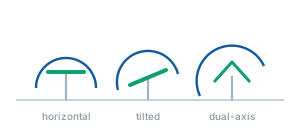
Which tracking configuration
Each configuration trades a different amount of gain against a different amount of structure.
- Horizontal single-axis — the common choice on flat, open ground
- Tilted single-axis — better on sites at higher latitude
- Dual-axis — the highest gain and the highest complexity
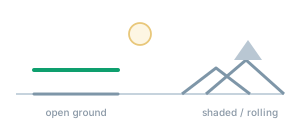
What the site has to allow
Tracking only pays where the ground lets the modules see the sun all day.
- Flat, open ground with low horizon shading
- Room for the array to rotate without collisions
- Access for the maintenance routine it will need
Technical specifications
Our tracker range is being finalised for the Nigerian market. Values below will be confirmed as the range is released.
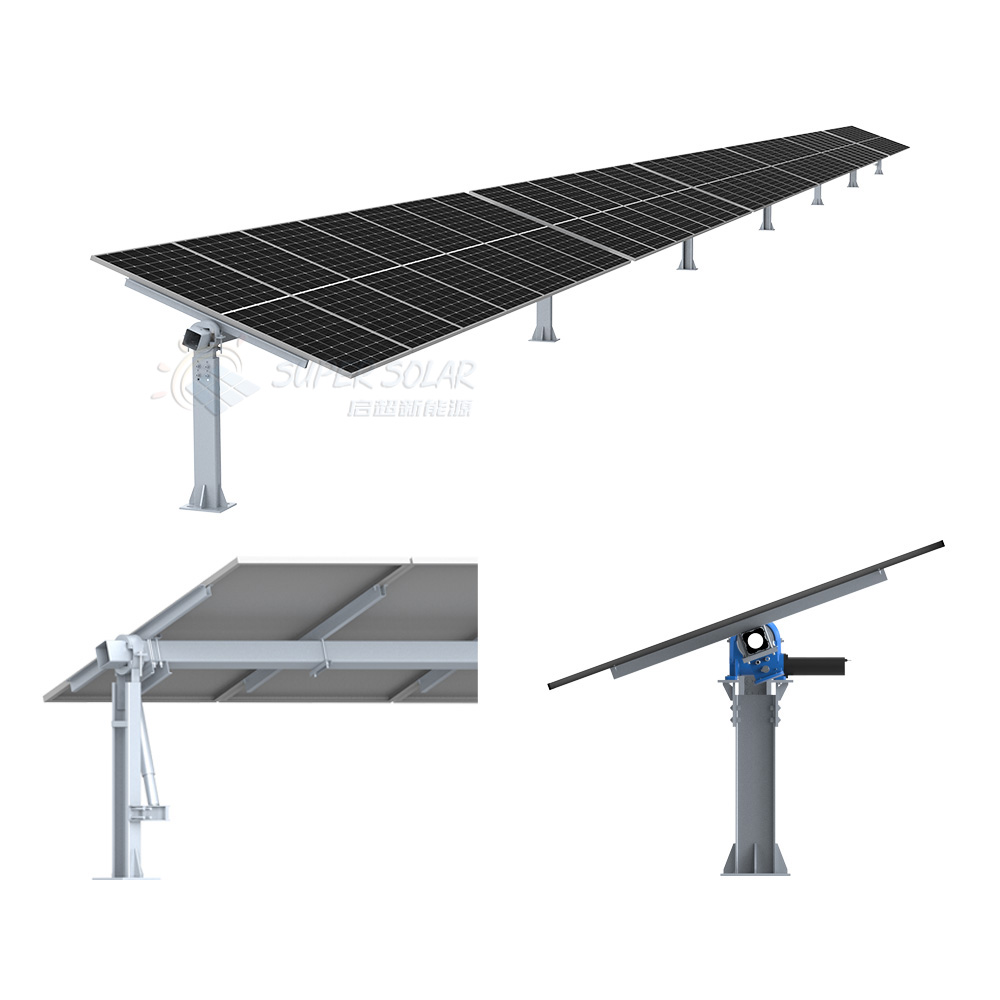
| Solar Tracking system | 1P flat single axis tracking system |
| Surface Treatment | Hot-Dip Galvanized |
| Structural materials | Hot dip galvanized steel, ZAM steel |
| Modules per Tracker | Up to 90 pieces |
| Foundation type | Concrete pile, Static pressure pile, PHC pile |
| Wind Load | Up to18m/s |
| Snow Load | 1.4kN/m2 |
| Tracking Range | +60° |
| Drive type | Rotary reducer |
| Communication method | Zigbee/RS485 |
| Standard | GB, ASCE, BSEN, AS etc.(according to project) |
| Working tempetrature | -30°Cto 60°C |
| Protective function | Protection System High wind/Night return/Motor overheat/overload |
Built for wide, open, unshaded sites
Tracking suits projects with plenty of flat ground and a clear horizon — and rarely suits anything else.
- Typical applications
- Utility-scale ground arrays
- Large C&I ground-mounted plants
- Mini-grid generation farms
- Sites with ample land, high irradiance and no shading
- What's included
- Site and horizon shading assessment
- Tracking gain assessed against fixed tilt
- Foundation proposal for the subsoil
- Structural design and bill of quantities
- Installation drawings and site guidance
Who We Work With
Tracking only makes sense on a particular kind of project — these are the ones it is built for.
Utility-scale developers
Large, flat, unshaded sites where tracking is worth assessing against fixed tilt.
IPPs & asset owners
Projects where yield per hectare drives the return and the extra O&M is planned for.
EPC contractors
Tracker structures supplied with the design, the drawings and the foundation resolved.
Mini-grid developers
Generation farms with open ground and a clear horizon, at a scale that justifies tracking.
Discuss tracking for your project
Send us the site size, location and target capacity and we will tell you honestly whether tracking is worth it for your case.
Frequently asked questions
No. On flat, open, unshaded ground the gain is real. On rolling, shaded or constrained sites it shrinks quickly and may not pay for the extra structure and maintenance.
More than fixed tilt. Drives, bearings and controls need a scheduled routine for the life of the plant. We set out what that involves before you commit.
Our tracker range is being finalised for the Nigerian market. Tell us about the project and we will confirm what is available and when.
Yes. Send the site location, the available area and the target capacity, and we will assess the two side by side.
The structure is designed for the wind zone at the project location, and the stow position is part of that design case. We will confirm the design conditions for your site.